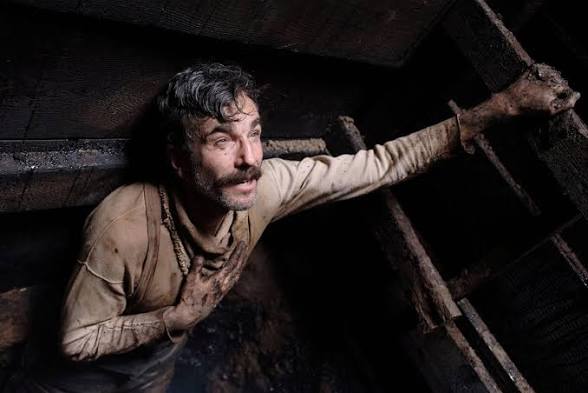
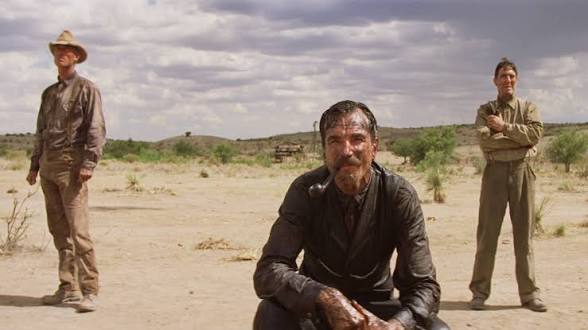
🏛️ THERE WILL BE BLOOD (2007) — CERTIFIED MGC MS-70 PRISTINE PROOF
⚖️ OFFICIAL CONSENSUS APPELLATE LEDGER
- Certified Grade: MGC MS-70 (The Ultimate Standard of Flawless Premier Filmmaking)
- Strike Power: Monumental performance architecture and pristine active narrative luster.
- 5x Lens Verdict: Exhibiting zero structural defects, flawless second-act tracking, and impeccable technical execution.
- Lower Court Jurisdiction: Judge Tina, Chief of Cult Classics
- Supreme Commander Decree: Neo MGC, Chief Justice
📜 THE INITIAL INQUEST & FORENSIC LOG: CASE FILE #011
Baseline Bench Assessment: Room Allocation ➔ MS-68 (Choice Gem Specimen) due to localized structural fragmentation and narrative luster loss in the final act.
1. The Eli Sunday Character Drift (Performance Inconsistency)
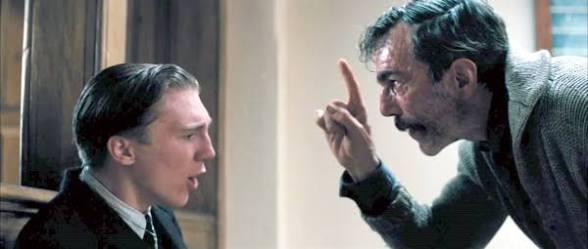
- The Objection: While Daniel Day-Lewis delivers an uncirculated, towering strike, Paul Dano’s dual performance as Eli Sunday exhibits a distinct tonal variance under the 5x lens.
- The Forensic Data: In the final 1927 bowling alley sequence, Dano’s performance pivots from a grounded, manipulative religious zealot into a hyper-stylized, almost theatrical caricature. This creates a localized performance friction, contrasting too harshly against Plainview’s deeply rooted, methodical madness. For a perfect MS-70, character dynamics must maintain complete stylistic alloy across all eras.
2. The Final Act Time-Skip (Structural Fragmentation)
- The Objection: The sudden 16-year narrative leap from 1911 to 1927 causes a microscopic pacing scuff in the film’s circulation.
- The Forensic Data: The first two acts are a masterclass in slow-burn, industrial realism, focusing meticulously on the physical labor of oil extraction. The rapid jump to a lavish, isolated mansion in the final act fractures that established atmosphere. It forces the film to resolve decades of complex psychological warfare between Plainview and his son, HW, in a highly condensed, episodic manner rather than a continuous fluid bleed.
3. The “Bastard from a Basket” Escalation (Narrative Escapism)
- The Objection: The final confrontation introduces a sharp drop in narrative luster, bordering on grand guignol melodrama.
- The Forensic Data: The bowling alley climax, while iconic, abandons the cold, calculated socio-economic warfare that drove the entire movie. Plainview’s physical escalation and the cartoonish “I drink your milkshake!” dialogue represent a sudden, highly volatile shift in script texture. It prioritizes a shocking, theatrical exclamation point over the pristine, realistic narrative execution maintained throughout the rest of the file.
⚖️ THE APPELLATE REVIEW & REVERSAL ARGUMENTS
The Supreme Court launched a massive counter-offensive to dismantle the prosecution’s brief, offering deep structural reasoning that successfully overturned all three logged defects:
- The Big City Metamorphosis (Defect 1 Overturned): The Chief Justice ruled that Eli Sunday’s performance shift is not an inconsistency, but a deliberate historical representation of change. Eli left his small town for the big city, where he became corrupted by urban wealth, investments, gambling, and heavy drinking. The theatrical veneer he displays in 1927 is the natural evolutionary result of the big city warping his character alloy over sixteen years of exposure. The objection is overruled.
- The Truncated Sandwich Principle (Defect 2 Overturned): Addressing the 16-year time jump, the Chief Justice noted that while a major chronological skip can sometimes cause a pacing scuff, it was mathematically necessary in this specific instance. A film cannot physically run for sixteen real years. Daniel always had a dwelling place—whether a primitive desert shack or a sprawling mansion—and his friction with H.W. was a constant thread throughout his entire life. Showing the “middle of the sandwich,” such as old man Bandy’s funeral or decades of administrative land deeds, would actively create an immense narrative drag, reducing the film’s grading tier down to a worn, six-hour VF-35 junk box. The skip flawlessly focuses the lens on the lifetime accumulation of hatred. The objection is overruled.
- The Peaceful Sanctuary Defense (Defect 3 Overturned): The Chief Justice dismantled the accusation of grand guignol melodrama by analyzing the final sequence’s true motivation. Daniel Plainview was not acting out of uncalibrated madness; he was an old man living in isolation, surrounded only by his closest, trusted associates, desperately seeking to protect his hard-earned peace. He did not seek a fight. Eli Sunday—the man who made Daniel’s life absolute hell for decades—willfully intruded upon his sanctuary to inflict more pain on an old man, attempting to hustle him with a dead tract of land. Eli completely failed to realize that Daniel had already drained the oil from the Bandy tract years prior via subterranean drainage. Woken from a heavy hangover sleep by the individual he despised most, Daniel executed a swift, decisive, and permanent retaliatory strike to eliminate his lifelong tormentor. The explosive shortness of the scene is a structural triumph. The objection is overruled.
⚖️ THE SUPREME VAULT PETITION
- The Sovereign Alibi Defense: The final interaction between Daniel and H.W. solidifies the film's unblemished narrative core. Daniel’s rejection of his son is not a script defect, but the final, structural burning away of all human dependency, leaving behind a perfectly pure, uncirculated specimen of absolute capitalistic isolation.
🏆 FINAL DECREE & CERTIFIED JUDGMENT
Having completely systematically demolished the localized lower-court objections, the appellate bench hereby restores this absolute masterpiece to its rightful position in the premier archives.
- Official Status: Case File #011 Fully Cleared.
- Final Grade: MGC MS-70 Pristine Proof.